
Kuala Lumpur and Malaysia: The Same, But, Like, Different
- Nikola Ranick
- Dec 2, 2025
- 6 min read
Hello to a country unstably oscillating between a diverse urban abundance and majoritarian machine-style reparations
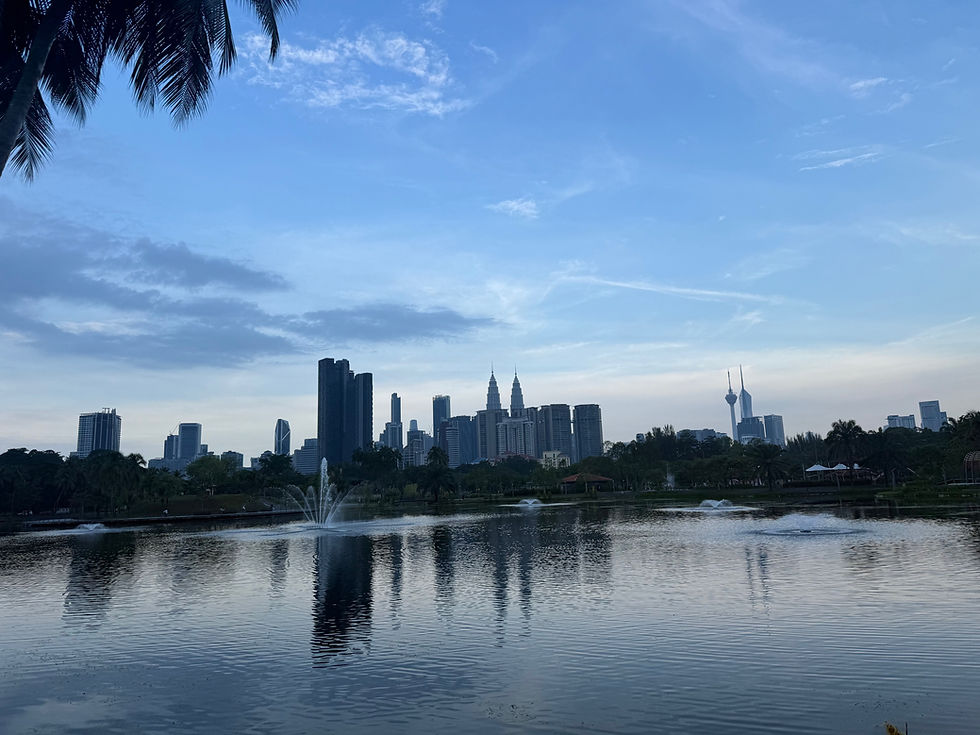
Out of any city I visited, Kuala Lumpur may have been my favorite. A relatively walkable urban oasis with affordable dining and shopping, it felt like a Tokyo on clearance. But WAIT! The people here all have different skin colors too, a reflection of Chinese and Indian migration into the region for the rubber and tin industries. Sure, they are all still technically Asian, but this degree of diversity alongside indigenous tribes probably makes it one of the most diverse cities in all of Asia, and suggests positive colonial state building.
Speaking of which, the country writ-large is a developmental success in comparison to both its prior colonial powers (boasting abundant modern industries and one of the best passports) and its regional ones (Thailand now ranks significantly behind it in development and quality of life). And even in this majority Muslim country, culture and enterprise is inclusive to the point that the gays and even transgender citizens (literally) strut down the streets with their purses in full view.
The city is highly developed - the first on mainland Southeast Asia where I could flush my toilet paper again and enjoy a relatively well integrated, and state of the art, transit system. Especially noteworthy after my cash disaster in Thailand, Malaysia boasts low ATM fees alongside a culture of cashlessness, with numerous billboards and government directives looking to engender that further. Both through tourist attractions and business incursions, the city and its 2nd tallest building in the world channel a Gulf-State Megalopolis in the veins of Dubai (its signature chocolate was everywhere). And if you read anything about its recent economic history, you'll know it has so far weathered the globalization wars relatively well to continue its magnetic growth and internal opportunities. A brain drain it is NOT - except to Singapore, its former countrymen split over concerns of ethnic Chinese influence.

It is only that city-state which ranks higher in development and income in the region. But it is Malaysia that first crossed the line in ousting a legacy political dynasty out of power in favor of a unified racial coalition - though it has since fallen and a Chinese or Indian PM is a line yet to be crossed. And its expat communities and diversity inherent make Malaysia a champion for ASEAN and its intergovernmental work. When I was there, numerous exhibits and banners proclaimed their regional chairmanship to foreign visitors and locals alike.
HOLD ON. Note my seamless transition from Kuala Lumpur to all of Malyasia. You can bet this is a common narrative for many journalists and visitors who jet-set into the country, and then out, without further consideration. This is both true and false - everything I listed is technically the case for the whole country, yes, but the very best is always found in this capital. Alas, KL, as we all must call it for syllable integrity's state, is another case of Capital vs. Everything Else. With the metro area 4x bigger than its second, the development model feels very Korean. After a couple days, it becomes very apparent - more than in Bangkok and maybe more than even Seoul- that I was only getting a snapshot of Malaysia.

The share of Indian and Chinese ancestry is larger in the capital than elsewhere, creating an illusion of accepted diversity in national identity over the Bumiputra (read non-Chinese/Indian) domination witnessed further inland and on the islands. I was told that more typical Malaysian experiences could be found in the smaller culinary hub of Georgetown, a historic island once serving as the colonial capital for the emerging state. Better yet, check out the heart of ethnic Malays via Malacca just a few hours south. My brief time outside of KL on a bus towards Singapore spoke for itself; sparse, minimally developed, cash-dependent, and overwhelmingly Malay and Muslim. But don't fear, the fabric of division lingers ever so subtly in the capital as well.
In the nearly tin roof-free capital, all you gotta do is walk outside of the central train routes and pathways to get a taste of incongruency. Certain neighborhoods and residential developments, even those close to the Petronas Towers, are run down, ethnically separate, and rather 'slummy.' You can also pick up a mood based on the main ethnicity of these communities: Malays maintain much resentment towards their Chinese and Indian counterparts who, despite a large Muslim population in the latter, seem culturally distinct, often isolated, and much wealthier. Don't get me wrong-the resentment goes in both directions. That they get along at all in public while trashing each other in private gave me an eerie reminiscence of the Balkans.

Of course, this country is now wealthier than much of Eastern Europe, although not in all corners. The Malays benefit from an economic reparations system that both prioritizes them as an ethnic group and establishes specific products and benefits for their use. It is a reparations-style system long intact, and expanded, since independence and in atonement for the prime financial roles that Indians and Chinese were given by colonial authorities. You would think that such policies in effect for so long would end up having their intended result, but instead of focus on lowering income gap between Bumiputra and Indian/Chinese, parties often focus on its exacerbation to squeeze out more benefits and obviously incentivize support through an old-school patronage system that old machine style Italians would salivate over.

Central to this victim-hood narrative for Malays is their status as so-called 'real Indigenous Malaysians,' a category conveniently including much poorer indigenous groups on the Malay Strait and tribes on the islands of Sarawak and Sabah. The composite term of Burmiputra, then, is actually a large assortment of varying ethnicities, incomes, and cultures that would be like lumping all black and brown Americans into the same...nevermind. Naturally, including all Non-Indians/Chinese inherently advantages Malays because it understates their income and therefore gives them access to resources they may not longer need (consensus on that, of course, is hard to come by). Don't get me wrong, the average Maly income is likelier lower than the Indian/Chinese, suffering from nonnegotiable institutional inequality during colonial times. Still, I do worry this narrative of the 70%+ of the country will last long enough to enamor a Balkan-level entitlement to land, income and country. And Lord knows we do not need anymore ethnic violence.

Indeed, this once proud country has been knackered in recent years by political breakdown. One of its Founding Fathers' sons stole an insane amount of money from a government investment scheme for himself and then (almost) skillfully hid behind ethnic politics to justify his corruption. And despite, or perhaps because of its recent multi-ethnic coalitions, the patronage systems has never been more spotlighted, yet enabled. A potential case-in-point: The palace by which its rotating Sultancy works at is also supposed to have been finished in March 2025-when I was there it was still closed. A reflection of a country more concerned with fighting over spoils than actually increasing them in the first place? Or perhaps the politics have always been like this and now infect even its bubbled capital.

Where does Malaysia go from here? I sure don't know! The current, PM Anwar Ibrahim, was a popular (and once-jailed) opposition leader who seems to have made his peace with the establishment in his quest for power - this is a Thai trend Malaysians shouldn't want to copy. For the many wanting a more open minded Malaysia, it both rings and stings. That Malaysia will forever shadow its former financial hub, Singapore, is another sting. Maybe in an American respect, The Land of Eternal Summer is just too big and too diffusive to have an average identity. If that's the case, Good Luck Babe.
PS: I technically went to Laos before Malaysia but that heavier visit will come at a later date, I PROMISE


Comments