
Japan Wants You to Know Its Best Moments in History... and That’s It
- Nikola Ranick
- Jul 29, 2025
- 5 min read
Updated: Aug 17, 2025

The Land of the Rising Sun is notoriously secluded, a geographic advantage superior perhaps even to the States. Naturally, this seclusion has created a particularly resilient culture of its own, with traditional spins on modern living making it much like a fever dream to experience.
I had the chance to tour the Big Three (Tokyo, Kyoto, and Osaka) recently, an admittedly urban perspective that nonetheless helped me understand the living style of at least half of the country. What did I learn? Well, beyond my inferences (which are vast), not much, but that is precisely the point.
I have a penchant for browsing through neighborhoods, not just the tourist quarters (Shinjuku and Shibuya) or the wealthy enclaves (Ginza), but also working class neighborhoods (hello, Ota City) and traditional-ish towns (Yanaka). They all exude this unique mix of what we would consider western modernity along an eastern axis.
True to the Family Guy Schtick, everything is smaller, from the cars, to the dwellings, food, and clubs. But what they lack in space they make up for in immediacy. Japan has a notoriously advanced convenience culture, where even food picked up at the franchised 711 looks gourmet. Also note the overwhelming amount of vendors and third spaces, be they parks, shopping malls, or hybrids of the two (coffee, interestingly, was a much smaller part of the culture in the big Three than anywhere else in Asia).

The cities, despite their immense density, are also stunningly clean, even quiet on major roads, one of thee many benefits of an ironclad social contract on a largely homogeneous island. True, I noticed many Nepali and some Indian flags at ethnic restaurants, but beyond the individual Southeast Asian guest quietly manning the convenience shops, any sort of organized minority presence is largely nil. The closest I got to it was an Ota City museum Seaweed Yeomen who were displaced in urban redevelopment post-WW2. Naturally, the gentrification and indigenous-assimilation policy occurred in less explosive manners than in the States.

Beyond rental constraints from limited space, development, and curious inheritance rules, the country is remarkably cheap relative to its cost, certainly for foreigners. Full meals could run as low as $3, or a bit more if you wanted a Western size. The style of food was also much healthier, and public bathrooms are abundant everywhere, with squeaky clean bidet style toilets the usual even there. The trains are frequently on time, and subways and malls are made to be accessible and available from any building or subway stop, a testament to the complex yet efficient stole of Japanese Engineering. While some procedures could be hard to grab onto, eventual mastery makes them secondhand knowledge for locals and incredibly high tech. Especially for the Anime Bros, this is one big Valhalla.
But, of course, the rose colored glasses are just that. Japanese wages have been stagnant, if not downright declining, in the past half-decade. This means that Japan’s young adults make little to nothing more than their parent’s generations, all while dealing with constrained housing and a global market that makes exports competitive but imports often unattainable. Politically, the country operates similar to its culture. The governing LDP have ruled largely unabated since the end of WW2, but has ideologically oscillated on pace with the wind, an evolving one-party state ideology rivaled only by the PRI in Mexico. Unlike its Latin Comparison though, Japan is genuinely Democratic, embodied in the LDP's recent loss of majorities in both Parliament Houses (known as the Diet), in favor of long side-lined opposition and up-and-coming far right outfits. Alas, this system up until now has proven unable to remedy the Japanese slump of the past 30 years which may accelerate in the face of US tariffs.

This country seems so together, but perhaps that is because it is stuck. Automation and convenience culture stem from a lack of workers and a need for more streamlined processes. The third spaces are abundant because the first one, home, is far too small and crowded. And food is so cheap because everything financially feasible must be produced internally (a model currently failing with via a rice shortage), while still suffering from lower wages relative to its peers. Indeed, my journey's next stop, Korea, has become statistically wealthier than Japan in the last couple decades, a damning reversal of its historical colonial relationships.
It is the latter sentiment that I found the most startling. We read about Japan ignoring its history, but seeing it, or rather NOT seeing it, is another thing entirely. The cities are notably devoid of any sort of contemporary history, with those funds going to the arts. The few that are available tend to spotlight local history (Osaka’s museum displayed its development while Koto City's Edo Museum recalled its working class roots), or briefly mention the subject as a factor of its destruction and rebuilding thereafter. The actual Japanese Museum is itself tucked away in a perplexingly inaccessible Tokyo suburb, so I did not visit. I think that was likely the point...
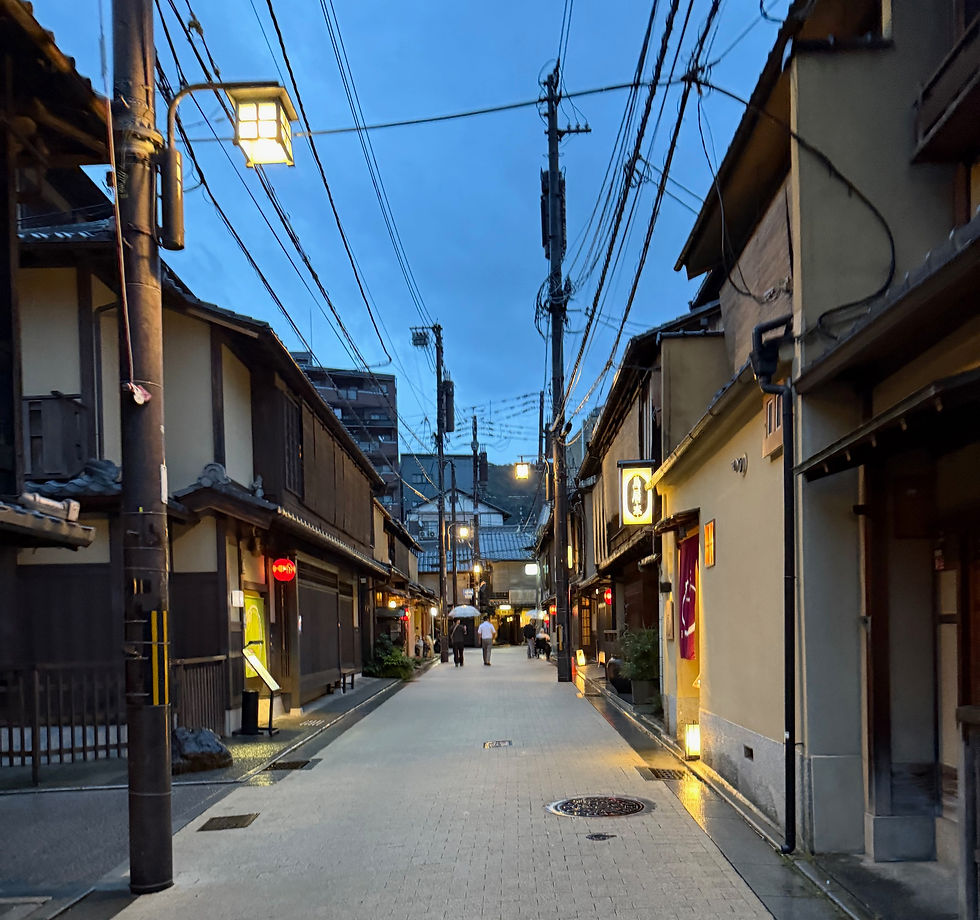
In terms of self-imposed narrative, you would think the Japanese were largely bystanders to global war, a position which hindsight suggests would have been the way to go. There was a particular focus on the closed-diplomacy Tokugawa Era from the early 1600s to mid 1800s, a statement of Japanese success and development in its own domestic culture. An even larger highlight was the Meiji Restoration thereafter, a period which saw the country open up to the world, maintaining its traditions while incorporating modern elements to become the developed nation it is today. If anything, World War 2 is suggested as an embarrassing deviation from the grandeur that beget Japanese Exceptionalism rather than a defining chapter of national and global history. It's like talking about US triumphs post war while ignoring radical segregation at home (although perhaps too many Americans seem ok with that as well).
Dense culture aside, the Japanese are a quirky people. A large minority, perhaps 25%, remain masked, a lingering concern from Covid, Dengue Fever, and a general dislike of pollution. I did wonder how much of it also came from the shame of performing working class jobs (though travel blogs falsely suggest that tipping is not the norm because of reasonable salaries).
The professional and neat culture evaporates in the later evening hours as hordes stumble around in often drunken stupors (good thing the high frequency of public transit creates a near universal Designated Driver), but everything always ends up clean enough by morning. One of my French Hostel mates told me it was common for Japanese drinkers to throw up and pass out on the streets, while good Samaritans would leave water bottles for them when they sobered up. That is a sharp contrast to the states, whose sidewalk sleepers will lose more than they gain.


Comments